
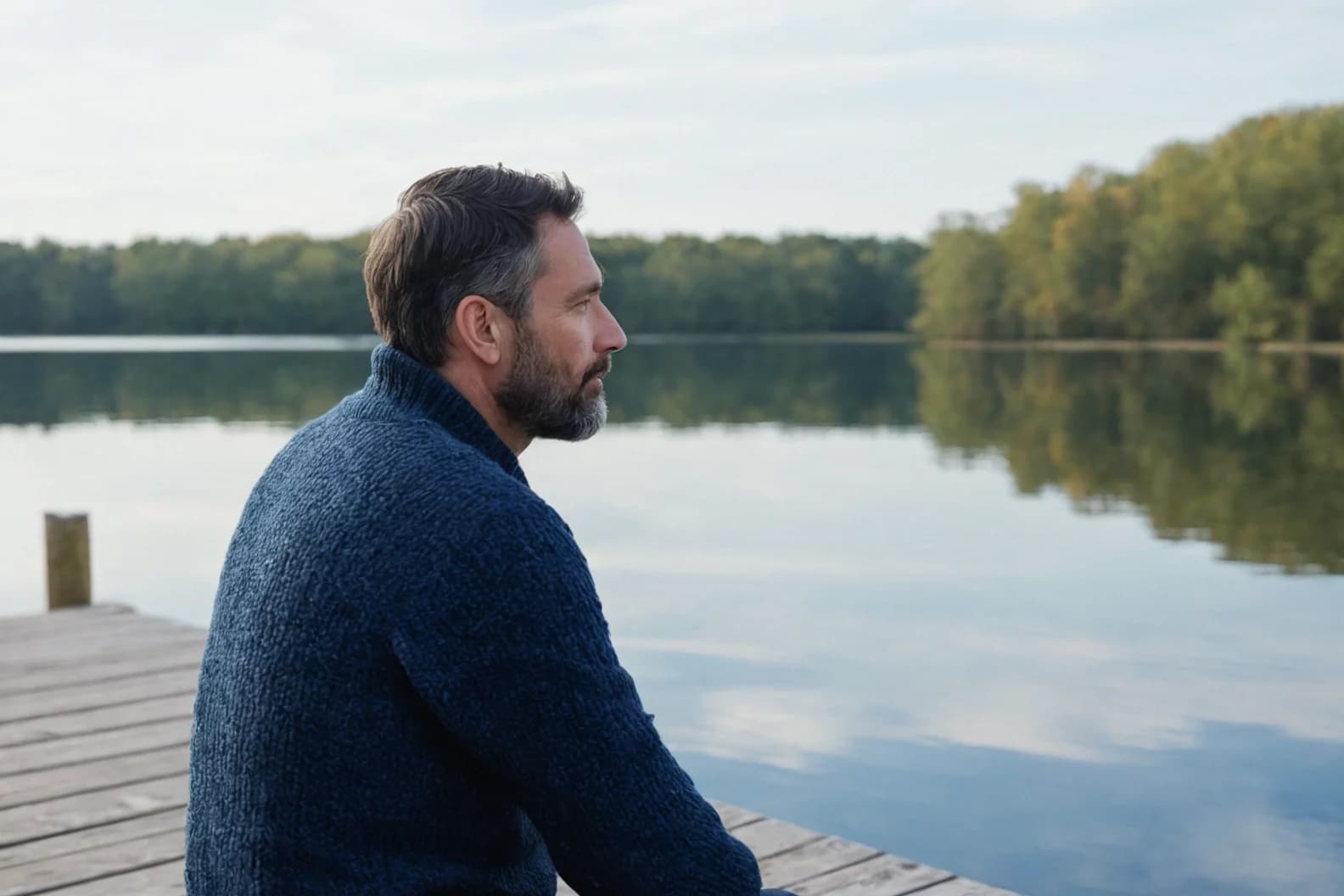
When You Need to Be Strong – and No One Asks How You Are
(Writing for men about performance, relationships, and unspoken burdens)
There is a sentence that men rarely say out loud:
"I don’t know how much longer I can hold on."
Not because they don’t feel it.
But because they have learned that it’s not their job.
The male role that no one names
Most men enter a relationship with the same invisible package:
- be strong
- be stable
- be a problem-solver
- be present
- create security
- don’t fall apart
And in the meantime:
- work
- perform
- build
- provide
- don’t complain
This role works for a long time.
In fact: it’s attractive.
But it’s not human.
It’s unsustainable.
When performance gets tired
At some point, life starts to ask.
Work pressure.
Financial responsibility.
Family.
Children.
Physical changes.
Midlife questions.
At this point, a man doesn’t necessarily want to step out.
He just can’t be present in the same way anymore.
And this is where misunderstandings begin.
What a man experiences at this time
Many men feel this:
- shame for "not being themselves"
- fear of losing the connection
- pressure to perform even better
- frustration because there is no room for weakness
And what he often does:
- shuts down
- rationalizes
- distracts
- escapes into sexuality
- or emotionally disappears
Not because he doesn’t love.
But because he doesn’t know how to be a man differently.
The breaking point of the relationship
Many relationships don’t break where there is an argument.
But where the woman – often unspoken – feels:
"I no longer feel safe with you."
The man often hears this as:
"You’re not enough."
And this is where they slip past each other.
The man wants to perform even more.
The woman seeks presence even more.
Two different languages.
For the same problem.
What no one taught
Most men were not taught how to:
- ask for help
- be weak without losing their authority
- remain a man even when tired
- provide security without performance
Yet true strength comes not from constant control,
but from connection.
What can a man do in this situation?
It’s not about quick fixes.
Not about "hacks".
But about steps that regain control without
putting on armor again.
1. Don’t be stronger – be more honest
When you’re tired, uncertain, the solution is not "I’ll just clench my teeth harder".
True strength is often this:
"I’m not okay right now, and I don’t know exactly what will happen – but I’m here."
This is not weakness.
This is presence.
2. Don’t try to solve the feeling – name it instead
Many men lose connection here by immediately seeking a solution:
- more work
- more money
- more control
- more sex
But often it would be enough to say:
"I’m afraid I’m not enough."
This is not a romantic sentence.
But it opens connection.
3. Don’t just provide function – provide emotional presence too
Security can’t only be given with money and performance.
Security is also when:
- you’re there without being asked
- you listen without offering solutions
- you don’t rush a difficult conversation
Many women don’t feel that the man is "giving less".
But that they are left alone with their feelings.
4. Notice what you escape into
Under pressure, ask yourself:
Am I escaping into work?
Into sexuality?
Into silence?
These are not mistakes.
But if they permanently replace real connection, they will be destructive.
5. Dare to ask for time – don’t disappear
There is a huge difference between:
"I need a little space right now"
or simply disappearing.
The first provides security.
The second breeds uncertainty.
6. Don’t carry your burden alone
Most men ask for help too late.
When they are already:
- burned out
- shut down
- or have lost their connection
A conversation, therapy, an outside perspective
is not weakness – but foresight.
7. Ask yourself the real question
Not whether:
"Am I good enough?"
"Can I keep this relationship?"
But this:
"What kind of man do I want to be when I’m not strong?"
This question doesn’t provide a quick answer.
But it does provide direction.
Closing thought
A man’s strength is not that he never falls apart.
But that he doesn’t leave himself alone with it.
And if you learn this,
your relationship won’t depend on your performance –
but on whether you are present as a person.