
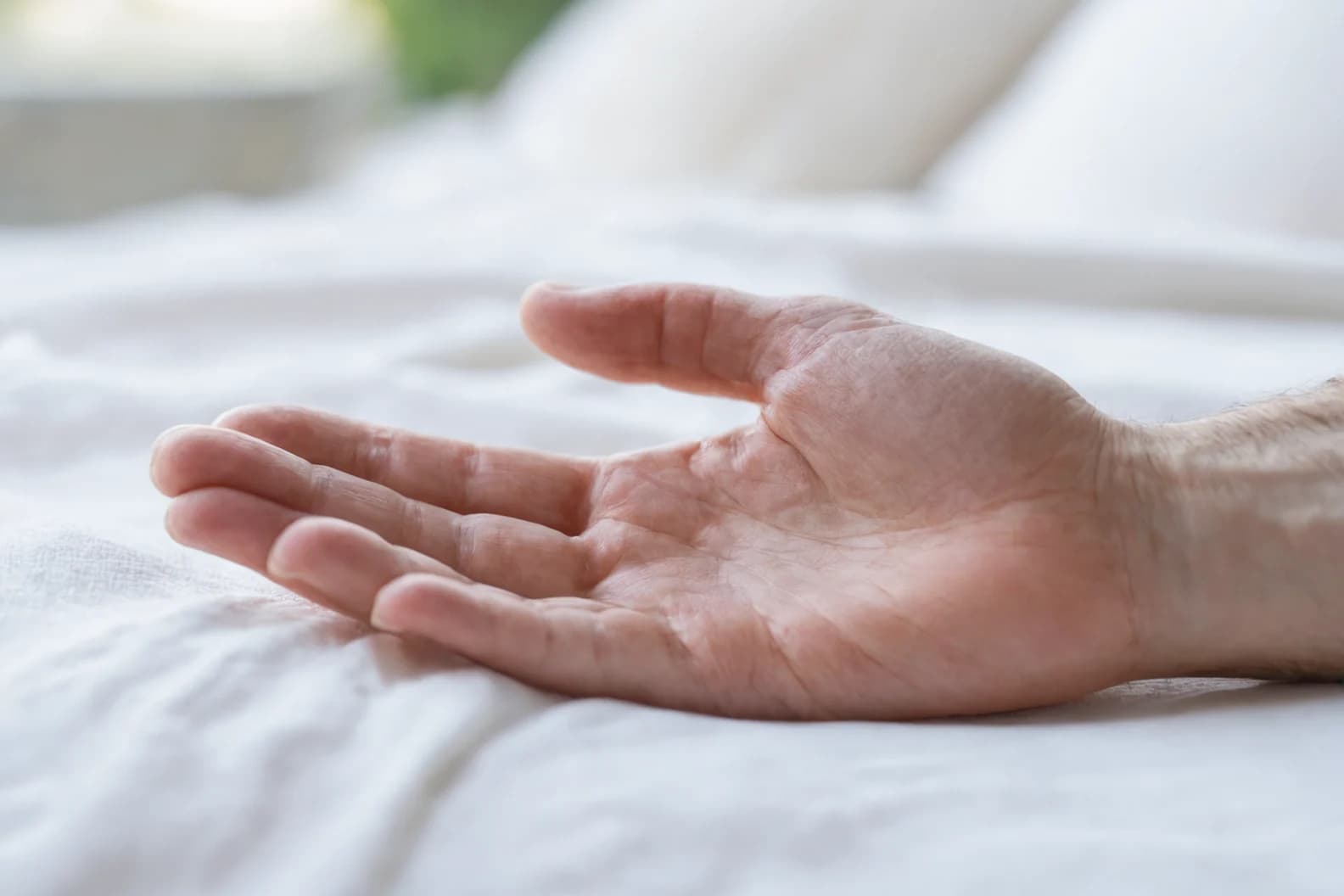
When the Body Learns to Respond to a Certain Touch – The Neurological Background of Ingrained Masturbation Patterns
✋ Why do I only reach climax with manual stimulation?
More and more men are asking this question:
"Why does it work alone, but is harder with a partner?"
"Why do I only succeed when I do it myself?"
"Why is a woman's hand, the vagina, or oral stimulation not enough?"
Many observe that when they masturbate for an extended period using the same manual technique — with strong grip, fast rhythm, always at the same point — the body becomes accustomed to this stimulus.
👉 The body gets used to it.
If the nervous system associates orgasm with this type of stimulation for years, then a different kind of touch — even if desirable — may be less effective.
This is not a lack of attraction.
This is a learned bodily response.
🌿 A personal story started here for me too
During the Covid period, I lived alone for a long time and got used to a certain type of vibrator while watching movies in the evening. After a while, I noticed that when I was with a partner again, I found it harder — or not at all — to reach orgasm in the same way.
This was the point when I truly understood:
the body learns.
And what it has learned can be re-taught in a new environment.
The good news?
This is not a permanent state.
🧠 How does the nervous system learn in sexuality?
During orgasm, dopamine, oxytocin, and endorphins are released — these are the reward substances of the nervous system.
If a form of stimulus (such as strong vibration, fast rhythm, or high pressure) repeatedly leads to this reward, the brain starts to "seek" it.
We call this process neuroadaptation.
Over time:
• the nervous system adjusts to a higher threshold of stimulation
• weaker, slower touches become less effective
• longer time is needed with a partner for arousal to build
• specific conditions may become necessary
This is not weakness.
This is biology.
✋ Why can it be difficult to reach orgasm with a softer touch?
If someone has been:
- stimulating with a strong grip,
- at a fast pace,
- always at the same point,
- in the same body position,
then the nerve endings in the skin and the brain's nerve pathways adapt to this.
A partner — for example, a softer hand, vagina, or mouth — provides a different type of stimulus.
Not a worse one.
Just a different one.
And the body still expects the "old program" at this point.
🔄 What can be started at home to change?
If someone recognizes this pattern, they can try several things:
✔️ 1) Conscious variation of technique
- lighter pressure
- slower pace
- different grip
- different rhythm
✔️ 2) Conscious change of types of stimuli
(not deprivation, but re-learning)
The problem is not visual stimulation itself — nor is it a problem if someone is excited by more extreme scenarios.
The difficulty arises when the nervous system has tied arousal to only one type of stimulus.
In this case, the goal is not to reduce visual stimuli but to broaden the repertoire of stimuli:
- watching erotic content of different styles
- slower-paced scenes focusing on connection
- scenarios emphasizing emotional presence
- and yes: even more extreme categories, if other types of stimuli are also present
The same applies to the use of devices:
it is not necessarily about abandoning them, but applying them in a more varied way:
- different sizes
- varying vibration patterns
- slower movements
- alternating intensity
The goal:
👉 the nervous system should not be tied to a single stimulus but become flexible again.
✔️ 3) Shifting attention to the experience
- the goal is not orgasm
- slowing down breathing
- observing bodily sensations
✔️ 4) Performance-free encounters
Occasions where the goal is not climax — just connection.
This helps break down the "I must perform" cycle.
🧭 When is it worth considering further help?
If the change:
• is persistently difficult,
• causes frustration,
• creates tension in the relationship,
• is associated with anxiety,
then it is worth considering professional support — sexuality is a learned function, and one does not have to be alone in learning.
🌿 Closing thought + professional designation
The body does not work against you.
The body remembers.
And what it has learned in a certain environment,
it can learn a new pattern in a new environment.
If you are honest with yourself: has your body really "broken" — or has it just learned to respond to a single type of stimulus over the years?
The phenomenon is described by international literature under several names:
Idiosyncratic Masturbation Pattern (IMP),
conditioned sexual response,
and in some educational sources, it can also be found under the name "death-grip syndrome."
Each of these indicates that the nervous system has learned to associate orgasm with a certain mode of stimulation.